
Road Studs
Aloclite Road Studs (Model C-1210) from Ashu Enterprises are durable devices that provide day and night visibility in adverse weather conditions. These are reflectorised studs […]
Aloclite Road Studs (Model C-1210) from Ashu Enterprises are durable devices that provide day and night visibility in adverse weather conditions. These are reflectorised studs […]
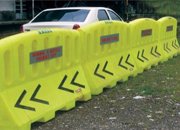
Jumbo Barricade from Protek Traffic Devices Pvt Ltd is a heavy barricade built to withstand knocks from vehicles without easily falling down. Being a water-filled […]

Prof Rajat Moona, with a B Tech degree in Electrical Engineering from IIT Kanpur and a PhD in Computer Science & Automation from IISc Bangalore, is the recipient of IIT Kanpur’s prestigious If you think that the much needed Smart Cards for driving licences and tracking road offences cannot become a reality in India, then we must tell you that this technology has already been developed by IIT Kanpur in 2001 itself. It is on this very technology that the Ministry for Road Transport and Highways’ much hyped ‘Vahan Sarathi’ programme is based. And if you want to know if such a Smart Card can tell about offences committed in other states and is operable pan India, then ask Rajat Moona, the Director General of C-DAC, Pune. As Vidyottama Sharma did. The answer: Yes, it can tell you of offences committed in other States. He should know, for his former team at IIT Kanpur is the brain behind this technology that is operable throughout the country. Which leads us to the next most important question: Then, what are we waiting for?

With 33,800 workers and 7,000 buses carrying 2.5 million passengers daily and covering 25 lakh kms a day, Karnataka State Road Transport Corporation (KSRTC) is one of the most profitable state transport undertakings in India today. Thanks to its Managing Director Gaurav Gupta’s pro-people approach and effort to leverage technology in achieving high deliverables, KSRTC has been termed as a trendsetter in the logistics of transporting people. The company has been making profits in the last few years – its last turnover was of र2000 crore. During the year 2010-11, it recorded the highest ever profit of र62 crore, thus wiping out the accumulated losses and making an accumulated profit of र43.75 crore in books.
KSRTC is the first transport corporation in the country to have a Global Positioning System, General Packet Radio Service (GPRS) based passenger information and ITS system fitted in its vehicles. With its excellent track record in profitability, fuel efficiency and operational efficiency, it has achieved a position where other states look up to KSRTC for following its expertise in various fields. In an extended conversation with Mangala Chandran, Gupta unveiled his plans for making the success of KSRTC a global benchmark in Sustainable Transport.

While many states and municipalities in India are still debating the pros and cons of various angles and policies on traffic management and road safety, the Pimpri-Chinchwad area of Pune has already begun taking long strides in these fields. Its ITS implementation based on the C-DAC applications has already been written about. Now, it is the Road Safety Audit of Pimpri-Chinchwad’s Bhakti-Shakti Junction that is the news of the day. TrafficInfraTech brings you an exclusive report.
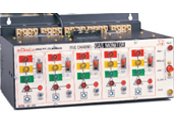
Gas Detection System for Carbon Monoxide from Subtronics Pvt Ltd is very useful in detecting the highly toxic but colourless and odourless carbon monoxide in […]

The installation of a manual or automatic toll collection system depends on many factors. The manual system is viable at places that have less traffic density & where the expected toll collection does not validate the implementation of a full-fledged computerised toll collection system while the automatic system can be applied only in areas that have a higher concentration of urban or frequent travellers. A look into these basic rules and a case study of the toll system at Beawar-Gomti Road Project.

Revenue leakages in toll collections deter private investment in roads. Road tolling is the only direct means of recovering costs for road agencies or developers. Shadow Tolling, an arrangement between the concessionaries and the government where the latter pays for all the vehicles passing through the road, could be the answer to the problem.

Toll systems in India have to put in place innovative strategies and efficient technologies. This is important to avoid customer inconvenience and revenue erosion, writes Prince Mitra, Head of Technology, Soma- Isolux, ITS & Highway Traffic.
