More than 50 Smart Cities across India have implemented Adaptive Traffic Control Systems (ATCS). Despite this investment, road networks remain highly congested during peak hours, raising critical questions for urban planners and traffic engineers. Are these ATCS installations effective? Would congestion be worse without them? What can be realistically expected from an ATCS, and ultimately, how can we leverage technology to reduce urban congestion? Rajesh Krishnan, CEO, ITS Planners and Engineers Private Limited, explores these questions and examines the evolving role of ATCS beyond simple signal optimisation.
The primary function of modern ATCS is to maximise the operational efficiency of the existing road network. Its second, and often overlooked, role is to provide the scientific data and analytical foundation required for shaping a truly efficient and sustainable multi-modal transport system for the future.”
— Rajesh Krishnan

At a fundamental level, ATCS is designed to reduce congestion. Most systems installed in India utilise tactical green-time adjustment logic, terminating a signal stage when it is not being used efficiently. This is often achieved through Vehicle Actuated (VA) like logic, where green signals are terminated or extended based on vehicle presence or gaps, thereby minimising wasted green time. This efficient management of time-share between different traffic streams reduces unnecessary delays at intersections.
Traffic is a stochastic process, with vehicles arriving at junctions at irregular intervals. Consequently, VA-like functionality that adapts to these random arrival patterns can be reasonably expected to improve traffic flow. Furthermore, a modern ATCS harmonises flows across multiple junctions by optimising cycle times and offsets holistically over a wider area, creating a smoother traffic experience.
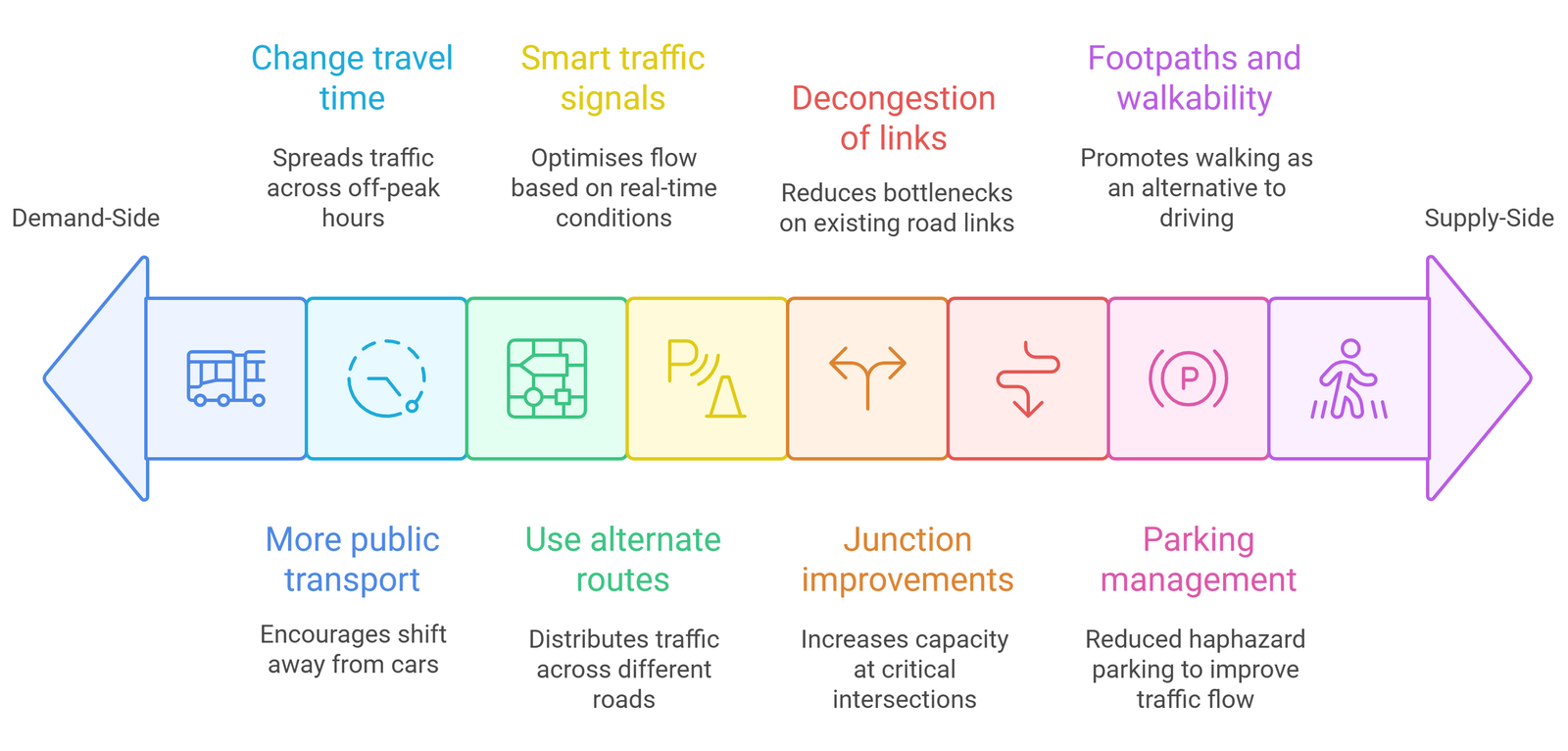
If ATCS is effective, why do major intersections remain congested during peak hours? Firstly, ATCS is not a plug-and-play solution. These systems rely on site-specific calibration parameters to make real-time adjustments to signal timings. These parameters must be calibrated correctly during commissioning and recalibrated periodically to maintain optimal performance. Without a structured programme for configuration review and recalibration, an ATCS solution cannot deliver its full potential. Cities must employ qualified technical personnel to perform these tasks and hold them accountable for key congestion-related metrics. Secondly, if traffic demand exceeds the road network’s capacity, even the most sophisticated algorithm cannot eliminate congestion. Traffic control strategies, such as gating, can relocate congestion but cannot make it disappear. The core issue becomes a fundamental mismatch between demand and supply.
Given these limitations, what is the justification for investing in ATCS? The answer lies in its advanced analytics functions, which support congestion mitigation strategies that extend beyond signal timing. Technical specifications in Smart City tenders now routinely include requirements for such functionality. A key capability is the system’s ability to estimate the state of the entire road network, including links that lack physical detectors. The output of these analytics can be instrumental in implementing effective demand management strategies.
The state-estimation function of an ATCS provides valuable insights into travel patterns, including when people travel, their origins and destinations, and their chosen routes. This data identifies which junctions and links are oversaturated and pinpoints the specific times they become congested. Moreover, the system can estimate the origins and destinations of vehicles contributing to this congestion. This information forms a powerful basis for demand management strategies, such as using targeted “nudges” to influence traveller route choice, departure time, and mode of transport. It also enables informed decisions regarding increased public transport capacity on specific, high-demand routes.
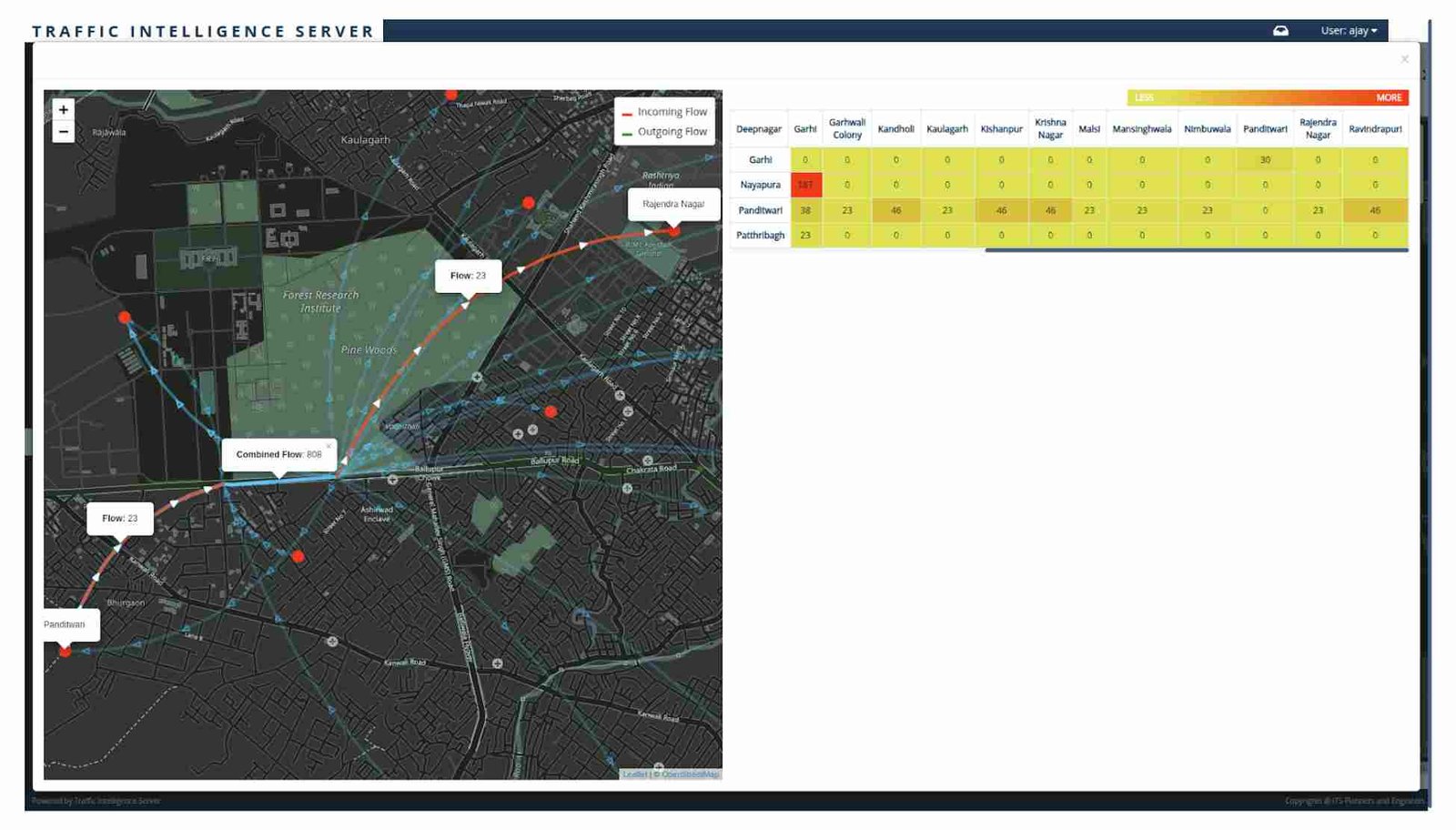
The analytical output from an ATCS can also guide data-driven decisions for focused traffic enforcement and medium-term infrastructure improvements. For example, enforcement drives against illegal parking can be strategically conducted at critical junctions during periods when they will have the greatest impact. In the medium term, interventions such as junction redesign, removal of encroachments or road widening can be prioritised to maximise their effect on reducing congestion.
In the long term, the supply-demand mismatch can only be addressed by treating the entire transport ecosystem—comprising different travel modes, road user types and their activities—holistically. Cities must plan to meet mobility demands through an integrated, multi-modal transport system rather than relying solely on private vehicles. Public transport accessibility, frequency and last-mile connectivity are crucial for encouraging a modal shift. Furthermore, walkability is a key enabler for the success of public transportation.
Evidence from numerous international cities demonstrates that we cannot simply build our way out of congestion. A holistic approach that integrates an efficient public transport system with a well-managed road network is the key to achieving congestion-free cities.