Bio-fuels in India–the need to explore alternatives
India’s bio-fuel policy has traditionally concentrated on ethanol from sugarcane molasses and biodiesel from Jatropha. But the production of both has fallen repeatedly short of […]
India’s bio-fuel policy has traditionally concentrated on ethanol from sugarcane molasses and biodiesel from Jatropha. But the production of both has fallen repeatedly short of […]
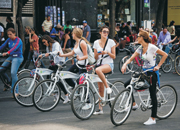
Public Bicycle Schemes are a great way to popularise the use of bicycles among the youth as well as working professionals. Ranjit Gadgil, Programme Director, […]

The North-South Bypass Tunnel (NSBT) runs for approximately five kilometres from Bowen Hills to Woolloongabba in Brisbane, Australia. Consisting of two tunnels, one for north-bound […]
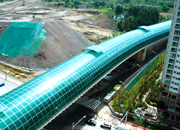
When the Environmental Noise Directive 2002/49/EG (END) came into force, the EU Member States were required to better protect their population from environmental noise. As […]
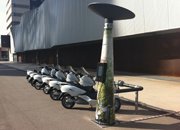
Under its Live Barcelona Project, the government of Catalonia provides over 240 charging stations for electric vehicles all over Barcelona city in order to promote electric mobility. The Spanish city is fast becoming the hub of electric mobility innovation.

Have you ever wondered what the dirt kicked off by traffic running past you on the roads does to you every day? When it comes […]

Nilesh Mundle, a pharmacy student, has advocated the use of turmeric oil extracted from discarded turmeric leaves as a possible bio-fuel for automobiles. His research […]

Vehicle population is on the rise all over the world. So is the human dependence on diesel. Have you ever wondered what emission from a diesel engine can do to your health? If not, read on.

Faced with a large scale increase in the number of private vehicles, rising traffic pollution, constant increase in fuel prices and growing traffic pollution, the European Commission – the executive body of the European Union – launched the Archimedes Project in 2008 under the City-Vitality-Sustainability Plus Initiative. Slated to be completed by 2012, Archimedes has promoted clean fuel environment-friendly vehicles and non-motorised transport, and at the same time, introduced innovative measures to reduce traffic congestion and enhance commuters’ safety.

The adoption of faster modes of transport has changed profoundly the spatial organisation of cities. The increase in average speed of a city’s transport system calls for more space. The result is urban sprawl and reduced density. Dominant transport modes are, therefore, the determinants of urban structures. The increase in distance covered due to increased speed of travel and urban sprawl leads to an increase in energy consumption.