With India entering a decisive phase in its urban transformation, rapid growth and rising population bring with them mounting challenges in traffic management and public safety. Traditional systems are struggling to keep pace, creating an urgent need for smarter, more integrated approaches. Ravi Kumar CK, VP–Business Development (Government & PSU), Videonetics Technology Pvt. Ltd, shares with TrafficInfratech how his company, with over 17 years of experience in developing indigenous, AI-powered video analytics solutions and having secured 150+ cities, connected 300K+ cameras and monitored 25K+ traffic lanes, is leading the charge for change.
The convergence of AI and video analytics is unlocking new possibilities to address complex issues in traffic management, enabling real-time monitoring of congestion, detection of violations and data-driven insights for better planning. Beyond mobility, AI-driven video intelligence is redefining urban safety. From early detection of suspicious activities to ensuring safer public spaces and faster incident response, intelligent systems are equipping city authorities with the tools to protect citizens and build resilient communities.
Together, these advancements represent more than incremental improvements—they signal a future where Indian cities are safer, more efficient and truly intelligent. By embracing this vision, we can transform urban living and set global benchmarks for sustainable growth.
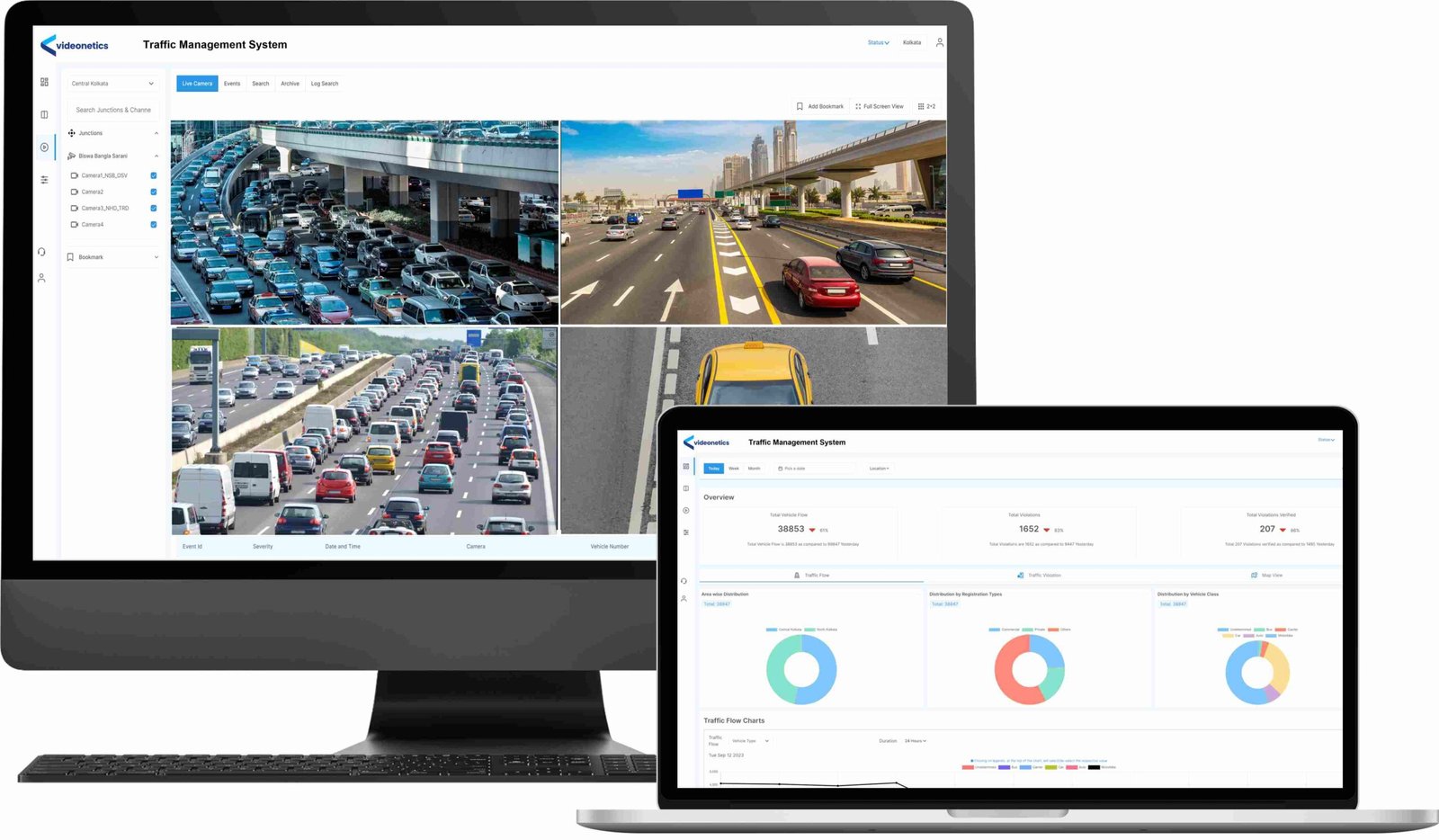
Video Management System (VMS) forms the backbone of a modern Urban infrastructure, providing comprehensive oversight of road networks & public spaces. The system integrates multiple camera feeds, creating centralised command centres that offer authorities unprecedented visibility across their jurisdictions. Modern VMS platforms eliminate the blind spots that have historically plagued traffic management & urban safety, enabling proactive rather than reactive responses.
AI-Enabled Video Analytics represents the next evolutionary step, transforming passive video feeds into intelligent data sources. Beyond identifying vehicle types, counting volumes and predicting congestion, these systems detect violations such as no-helmet riding, triple riding, missing seat belts, wrong-lane driving, speed limit breaches and more. Coupled with e-ticketing management, they deliver real-time, actionable insights that empower traffic authorities to enforce discipline and make instant, informed decisions.
Videonetics exemplifies the industry leadership required for transformation. We bring the proven expertise and local understanding essential for successful large-scale deployments. Our comprehensive platform approach, integrating VMS, AI analytics, traffic management, face recognition and VSaaS solutions, addresses the complete spectrum of traffic infrastructure needs while ensuring seamless interoperability.”
— Ravi Kumar CK

Traffic Management System (TMS) brings a new era of AI-powered traffic governance transforming vast video data into real-time intelligence. By detecting violations, issuing instant alerts and integrating seamlessly with vehicle databases, it empowers traffic authorities to enforce discipline with precision and transparency. More than enforcement, TMS serves as a decision-support system, enabling planners to optimize mobility, enhance commuter experience and strengthen road safety at scale.
Video Security as a Service (VSaaS) platform provides cloud-based infrastructure that eliminates the need for extensive on-premises hardware investments. This approach proves particularly valuable for traffic authorities managing multiple jurisdictions or those seeking to implement advanced analytics without substantial capital expenditure.
Face Recognition Systems (FRS) enable authorities to detect, match, and track individuals in real time and extending the same precision to offline forensic searches. This capability not only helps in tracing repeat violators and linking them across incidents but also strengthens post-event investigations with reliable, evidence-grade identity records bringing speed, accuracy, and accountability to traffic enforcement.
FRS in traffic applications extend beyond traditional identification, enabling advanced applications like helmet detection for two-wheeler safety, driver behaviour analysis and integration with violation enforcement systems. These capabilities address specific Indian traffic challenges where personal safety equipment compliance remains a critical concern.
The transformative potential of AI-driven video analytics extends across multiple industry verticals, each presenting unique opportunities for enhancing traffic safety and efficiency. Government Traffic Authorities represent the primary adopters, leveraging these technologies for comprehensive traffic management. State and municipal traffic departments are implementing AI-powered systems to monitor traffic violations, optimise signal timing and coordinate emergency responses. Delhi government’s initiatives to revolutionise the Integrated Traffic Management System (ITMS) through advanced video analytics exemplifies this commitment to technological transformation.
Smart City Initiatives under India’s ambitious Smart Cities Mission utilise AI-driven video analytics as core infrastructure components. These initiatives create integrated urban management systems where traffic intelligence connects with broader city operations, from emergency services to environmental monitoring. Highway Authorities and Toll Operators deploy these systems for monitoring long-distance corridors, managing electronic toll collection and ensuring highway safety.
NHAI and state highway departments are increasingly adopting AI-powered analytics to manage India’s expanding highway network. Private infrastructure developers implementing smart township projects and commercial complexes integrate AI-driven traffic management as essential infrastructure components, ensuring sustainable mobility within their developments.
The implementation of AI-driven video analytics has demonstrated significant positive impacts on road safety and traffic management efficiency across Indian cities such as enforcement and compliance improvements where cities implementing AI-powered traffic management systems report substantial increases in violation detection and enforcement effectiveness. Automated systems operate continuously without human fatigue, ensuring consistent monitoring and immediate violation identification.
There is optimisation in response time. AI systems enable traffic authorities to identify incidents within seconds rather than minutes, dramatically improving emergency response coordination. Advanced tools can rate congestion on a severity scale and make predictions about queue length and when traffic buildup began, helping guide decisions about which areas to prioritise.
Intelligent signal management systems have demonstrated measurable improvements in traffic flow, with some implementations reporting congestion reductions of 20-30% during peak hours. These improvements translate directly into reduced fuel consumption, lower emissions, and improved economic productivity. AI analytics also provide traffic authorities with comprehensive data about traffic patterns, violation trends and infrastructure utilisation. This information enables evidence-based policy decisions and strategic infrastructure planning.
Although requiring initial investment, AI-driven systems demonstrate superior cost-effectiveness compared to traditional manual monitoring approaches. Automated systems eliminate the need for extensive human resources while providing more comprehensive coverage and higher accuracy.
Despite the demonstrated benefits, several practical challenges affect the adoption of AI-driven video analytics in Indian traffic infrastructure. Infrastructure readiness remains a primary concern. Many Indian cities lack the robust networking infrastructure required for comprehensive video analytics deployment. Power supply inconsistencies and connectivity limitations in certain areas require strategic planning and phased implementation approaches.
Integration complexity with existing traffic management systems presents technical challenges. Legacy systems often lack the APIs and data standards necessary for seamless integration with AI-powered analytics platforms. This challenge necessitates careful vendor selection and implementation strategies that prioritise interoperability.
Skill development and training requirements cannot be underestimated. Traffic personnel require comprehensive training to effectively utilise advanced AI systems. Change management strategies must address both technical competency development and organisational culture adaptation. Budget constraints affect many traffic authorities, particularly at municipal levels. However, innovative financing models, including public-private partnerships and phased implementation strategies can address these challenges while demonstrating ROI through improved efficiency and reduced operational costs.
Additionally, privacy and compliance considerations require careful attention in AI deployment. Systems must comply with emerging data protection regulations while maintaining operational effectiveness. This balance requires thoughtful system design and clear operational protocols. Maintenance and support Infrastructure must be established to ensure long-term system effectiveness. Local technical support capabilities and preventive maintenance programs are essential for sustained operations.
Industry leadership and innovation is the way forward. The global ITMS market is projected to reach significant growth in the coming decade, presenting substantial opportunities for the country. India’s position in this growth trajectory depends significantly on the adoption and effective implementation of AI-driven video analytics technologies. Leading technology providers are addressing implementation challenges through comprehensive approaches that combine advanced AI capabilities with practical deployment strategies. Solutions that prioritise interoperability, scalability and local support infrastructure are proving most effective in Indian deployments.
The industry is witnessing increased collaboration between technology providers and government agencies, creating sustainable implementation models that address both immediate operational needs and long-term strategic objectives. These partnerships ensure that AI implementations deliver measurable value while building local capabilities for sustained operations.
In conclusion, the transformative potential of AI-driven video analytics in India’s traffic infrastructure is not merely theoretical, it represents a practical, measurable opportunity to address critical urban challenges while building foundations for sustainable growth. Success in this transformation requires strategic partnerships between technology providers, government agencies and implementation partners. The focus must remain on solutions that demonstrate clear ROI while addressing India’s unique traffic management challenges.
As India continues its rapid urbanisation journey, AI-driven video analytics will prove essential for creating traffic infrastructure that supports economic growth while ensuring citizen safety. The technology exists and proven implementation partners are ready to deliver. The challenge lies in strategic deployment that maximises benefits while addressing practical considerations unique to Indian traffic conditions.
Cities and states that embrace these technologies today, partnering with experienced providers who understand India’s complex traffic ecosystem, will establish competitive advantages in urban mobility, economic efficiency and quality of life, advantages that will compound over time as these systems mature and expand their capabilities. India’s traffic infrastructure transformation through AI-driven video analytics is an imperative for sustainable urban development in the 21st century.