


Page 30 - TrafficInfraTech Dec-Jan 2019
P. 30
ITS


                                                                                             to definitive trauma care.
                                                                                             Providers should be well
                                                                                             trained and should understand
                                                                                             the critical needs of a trauma
                                                                                             victim. Skill-based training
                                                                                             programs for doctors as well
                                                                                             as paramedical staff in Acute
                                                                                             Life Support (ALS) procedures
                                                                                             are needed.
                                                                                            • Organize and integrate pre-
                                                                                             hospital services with definitive
                                                                                             care facilities (hospital) so
                                                                                             that a patient is shifted to
                                                                                             an appropriate facility in
                                                                                             the shortest possible time.
                                                                                               The establishment of the Jai
                                                                                            Prakash Narain Apex Trauma
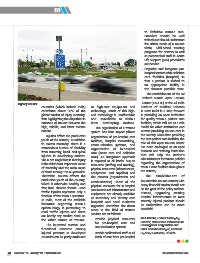
                  Highway Call Box                                                          Center (JPNATC) at the All India
                                countries (which include India)   to high-cost equipment  and   Institute of Medical Sciences
                                contribute about 90% of the   technology. Much of this high-  in New Delhi is a step forward
                                global burden of injury mortality,   end technology is unaffordable   in providing an apex institution
                                thus highlighting the disparities in   and unavailable to victims   for  quality  trauma  patient  care
                                outcome of trauma between the   from  developing  nations.  facilities, which will act as a role
                                high, middle, and lower income   The organization of a trauma   model for other institutions and
                                nations.                                                   centers providing trauma care in
                                                             system has four impact pillars:
                                  Injuries affect the productive   organization of pre-hospital care   the country. More than providing
                                youth of the country. In addition   facilities, hospital networking,   the best patient care facilities, the
                                to excess mortality, there is a   communication systems, and   role of this apex trauma center
                                tremendous burden of disability   organization of in-hospital   has been envisaged as an apex
                                from extremity, head, and spinal   care (acute care and definitive   research and training institution
                                injuries in developing nations.   care). An integrated approach   that will help the nation’s
                                The more tragic fact is that injury   is required at all levels: human   administrators formulate policies
                                is the third most important cause   resources (staffing and training),   regarding the organization of
                                of mortality and the main cause   physical resources (infrastructure,   trauma care facilities throughout
                                of death among 1 to 40-year-olds.   equipment, and supplies) and   the country.
                                Therefore, trauma  effects the   the process (organization and   The  establishment  of
                                productive youth of the country,   administration). Most of the   innumerable trauma centers with
                                which is otherwise healthy and   physical resources for in-hospital   heavy financial burden should not
                                free from chronic disease. Road   care in terms of infrastructure and   be the goal of the policy makers.
                                traffic injuries represent only a   equipment are already available   Instead, upgrading existing
                                fraction of the trauma spectrum.   at secondary and tertiary care   hospital infrastructure to treat
                                In India, most of the available                            severely injured patients should
                                literature regarding trauma   hospitals and need moderate   be  undertaken  can  be  more
                                epidemiology is pertaining to   upgrades. Therefore, the thrust   beneficial.
                                road traffic injuries and there   areas in the field of trauma
                                are hardly any studies done on   services are as follows:  Atul Kumar, Former Managing
                                the other causes of trauma.  •  Provide physical resources   Director, Uttrakhand Infrastrasture
                                  The improved  survival  and   for  pre-hospital  care  and   Development Corporation and
                                functional outcome among        communication systems.     Chief General Manager, National
                                injured patients  in  developed   •  Provide well-trained staff at all   Highways Authority of India
                                countries can be partly attributed   levels of care from pre-hospital


            30  December ’18 - January ’19  / TrafficInfraTech                                          www.trafficinfratech-com-500653.hostingersite.com

