


Page 58 - Traffic Infra Tech Magazine
P. 58
URBAN DESIGN


                  Delhi Nullahs
                  Deprioritizing the automobile and restoring

                  the nullahs as a major interface of the city


                  Morphogenesis presents the hidden opportunity that lies within Delhi
                  by establishing a green and sustainable network as an alternative and

                  democratic source of engagement within the city of Delhi. In some
                  sense, this exercise has the potential to turn the whole city inside out


                          he emergence of the nullahs
                          (watercourse)  initiative
                          stemmed from the realization
                          that the city has stopped
                  Tgenerating memories. It
                  is not just Delhi, - few cities in India
                  generate these like they did in the past.
                  Rampant development triggered by
                  population explosion has caused the
                  demise of urban spaces and walkability
                  options that allow people to experience
                  a city close-up are rapidly diminishing.
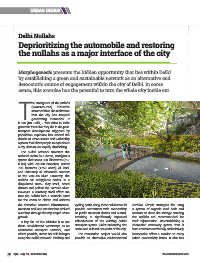
                   The  nullah network traverses the
                  national capital in a dense, contiguous
                  system that spans 350 kilometres (217
                  miles) with 20,000 branches, across
                  708 hectares (1750 acres) of land,
                  and ultimately all tributaries connect
                  to the Yamuna River. Currently, the
                  nullahs are unhygienic drains, in a
                  dilapidated state– they smell, breed
                  disease and pollute the Yamuna River.
                  However, a relatively small effort can
                  turn the nullahs into a valuable asset
                  for the common citizen and address
                  the distortion between infrastructure,   cycling paths along these nullahs would   corridor. Simple strategies like using
                  transport and land use that has evolved   provide commuters with connectivity   a system of organic reed beds and
                  over time through the city’s rapid urban   to public transport (buses and metro),   aerators to clean the sewage entering
                  growth.                           resulting in significantly improved   the  nullahs are recommended for
                   A key aim of this initiative is to use   effectiveness  of the existing public   their rejuvenation. Re-establishing a
                  these  rehabilitated  waterways  as  an   transport system whilst enhancing the   channeled waterway system  that  is
                  alternative transport network, and   social and cultural networks of the city.   both environment friendly and relatively
                  where possible, create last mile linkages   The restoration project would also   inexpensive offers a solution to many
                  along the nullah network. Walking and   provide an alternative environmental   urban connectivity issues. It also has


            58  April - May ’18 / TrafficInfraTech                                                      www.trafficinfratech-com-500653.hostingersite.com

