


Page 18 - TrafficInfraTech Dec-Jan 2019
P. 18
ITS


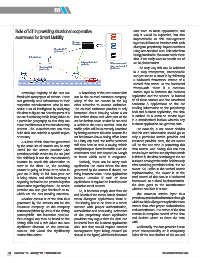
                Role of IoT in providing situational cooperative                       data from all these applications. Not
                awareness for Smart Mobility                                           only it would be expensive, but also
                                                                                       impracticable as this management
                                                  Service                              layer would have to interface with such
                                                  Provider
                                                                                       divergent proprietary implementations
                                       Standard IoT
                                       protocols                                       using non-standard APIs. This is far from
                                                                                       being practicable. We must break these
                        IoT platform
                                                                                       silos, if we really want to benefit out of
                                                       Info on detected
                                                       pothole           Other sources of  IoT implementation.
                              Standard IoT                               data, services, IoT
                              protocols                                  platforms        The only way this can be achieved
                                                                                       in a truly transparent, interoperable
                                                                                       and yet secure manner is by following
                                                                                       a horizontal framework instead of a
                                                                                       vertical framework. In the horizontal
                                                                                       framework, there is a common
                    Nowadays majority of the cars are   A beneficiary of the car’s sensor data   service layer in between the business
                 fitted with many types of sensors. These   can be the on-road assistance company.   application and the sensors. So instead
                 cars generally send information to their   Many  of the car owners  in  the  big   of all these sensors and the associated
                 respective manufacturers, who in turn   cities subscribe to on-road assistance.   hardware & applications on the car
                 derive a lot of intelligence by analysing   The on-road assistance provider is only   sending information to the proprietary
                 this data to figure out how the parts of a   interested about knowing where a car   back-end business application, the data
                 car are functioning while being driven in   has broken down and what part of the   is pushed to a common service layer
                 a particular geography so that they can   car has broken down, so that he can send   in a standardized fashion wherein any
                 make modifications in the manufacturing   a vehicle to the user’s comfort. Even the   business application can get that data.
                 process. The manufacturers can then   traffic police will be immensely benefited   For example, a car owner decides
                 build their cars suitable a specific region   by having access to this data because if a   that his car’s information should go to
                 or country.                       car has broken down during office hours   only a particular service provider and
                    A subset of this data thus generated   in a busy city road, the traffic personnel   insurance provider. Here, the car owner
                 by the same set of sensors can be very   will then have to send a towing vehicle   will be the one who is permitting this
                 useful for the service provider who   straightaway or divert the traffic. Even the   data access. And having this common
                 provides periodic service for the car (and   commuters need not depend on Google   service layer and the security framework
                 this definitely is not the manufacturer)   to  know  which route is congested.  built into it, the data pertaining to the car
                 because he needs this information to   Similarly, there can be many such   is shared amongst the stake holders only
                 cater  to  the  client.  So,  the  servicing   application use cases where the data   after obtaining permissions from the car
                 partner is going to know as to what in   generated by the sensors if shared, can   owner. So, unlike in the vertical centric
                 your car is likely to fail, how your car   bring immense value. These applications   implementation, the owner is at the
                 is being driven, and which inventory is   become unviable if each of these   total control of this data in a horizontal
                 depleting so that he can provide logistics   applications is required to install its own   framework. In a siloed implementation,
                 information regarding those. The service   exclusive set of sensors.  the data goes to the manufacturer
                 provider can also give feedback as to,   So, it becomes amply clear that the   whether one likes it or not.
                 which are the cars needing attention.  real benefit of the sensor data is obtained   The common service layer thus
                    Another consumer of the data thus   when divergent applications share it.   provides a standardised interface through
                 generated by the sensors can be the   This sharing has to be done in a secure   which multiple divergent applications can
                 insurance company, as the company   manner  with  proper  authentication,   extract data after proper authentication
                 insures user/driver by virtue of the driving   authorisation and accounting. Advocates   and authorisation. The owner of the data
                 pattern/skills. The insurance premium   of the proprietary siloed application   remains in complete control of the data
                 thus charged can then be based on the   providers may argue that the data can   and  decides  whom  to  share  the  data
                 driving skills and a safe driver can earn   be shared from the business applications   with.
                 significant discount  on  the premium   also. But that would require another   Additionally, the data provides future
                 amount. This would also significantly   management layer being created (as   proof interoperability as it completely
                 reduce false claims.              shown in the figure) which would extract   hides all the complexities of the car-end


            18  December ’18 - January ’19  / TrafficInfraTech                                          www.trafficinfratech-com-500653.hostingersite.com

